
Publication Ethics and Malpractice Statement
The Journal of Innovation in Governance and Business Practices (JIGBP)
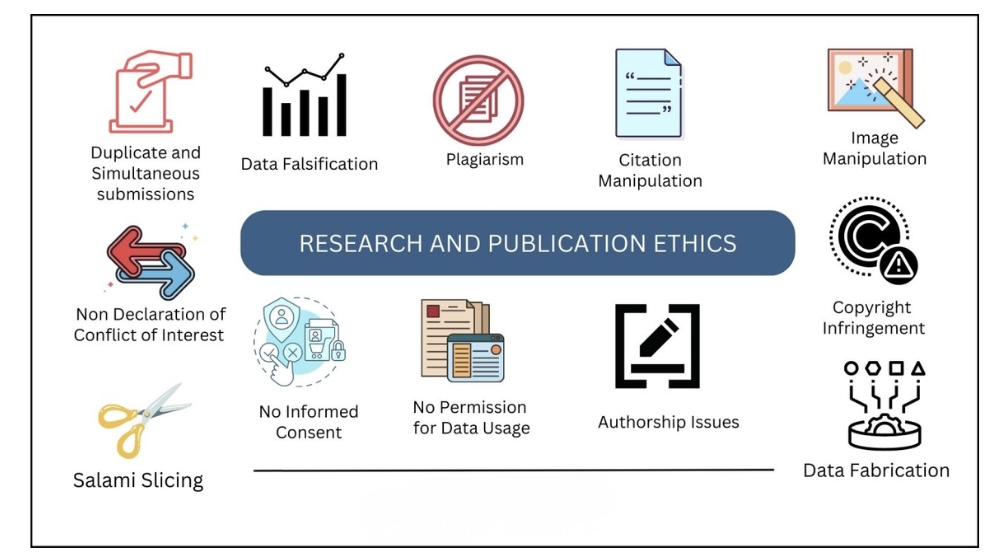
The Journal of Innovation in Governance and Business Practices (JIGBP) is committed to maintaining the highest standards of publication ethics, research integrity, and professional accountability. As an industry-driven journal publishing implementation-oriented scholarship, JIGBP recognizes that ethical compliance is foundational to credibility, operational trust, and responsible knowledge dissemination.
All submissions must represent original work that has not been previously published or concurrently submitted elsewhere. Authors are required to ensure the authenticity of data, the accuracy of technical claims, and the transparency of methodologies presented. Fabrication, falsification, data manipulation, image alteration that misrepresents findings, plagiarism, and inappropriate citation practices constitute serious breaches of ethical standards. Any detected violation may result in immediate rejection, retraction of published work, and notification to relevant institutional or corporate authorities where applicable.
Authorship must accurately reflect substantial intellectual and technical contributions to the work. All listed authors must have directly participated in the conceptualization, execution, validation, or drafting of the manuscript and must approve the final version prior to submission. Ghost authorship, honorary authorship, and undisclosed third-party writing assistance are strictly prohibited. Generative AI tools may be used only for language refinement or formatting assistance, and any such use must be transparently disclosed. AI systems cannot be listed as authors under any circumstances.
JIGBP operates a structured industry-based peer review process. Each manuscript is evaluated by three to five independent industry experts to ensure technical rigor, enterprise relevance, and operational applicability. Reviewers are expected to provide objective, confidential, and constructive assessments. They must disclose any conflicts of interest and recuse themselves from reviewing manuscripts where professional, financial, or competitive relationships may compromise impartiality.
Conflicts of interest must be fully disclosed by authors, reviewers, and editorial members. This includes financial interests, consultancy roles, corporate affiliations, intellectual property stakes, or competitive positions that may influence the interpretation of findings. Transparency ensures that readers can evaluate the objectivity and credibility of published research.
The editorial team is responsible for maintaining fairness, independence, and confidentiality throughout the review and publication process. Editorial decisions are based solely on technical merit, methodological quality, implementation validity, and alignment with the journal’s scope. Discrimination based on nationality, gender, institutional affiliation, corporate status, or geographic origin is not tolerated.
If ethical concerns arise post-publication, JIGBP will conduct a formal investigation following established best practices for academic and industry publishing standards. Where necessary, corrections, expressions of concern, or retractions will be issued to preserve the integrity of the scholarly record. Retraction notices will clearly state the reasons for withdrawal to maintain transparency.
Data transparency is strongly encouraged. Authors should retain underlying datasets and validation materials and make them available upon reasonable request, subject to confidentiality, proprietary, or regulatory constraints. Where confidentiality agreements restrict disclosure, authors must clearly indicate these limitations.
Through rigorous review, transparent disclosure, and strict enforcement of ethical principles, JIGBP aims to uphold trust within the global industrial and governance community. Ethical compliance is not treated as a procedural formality but as a core structural requirement that safeguards technical reliability, enterprise credibility, and responsible innovation.